Do Hotel Buffets in India Have Calorie Labels or Nutritional Information on Food?
If you are health-conscious, tracking macros, managing a medical condition, or simply curious about what you are eating — this is a completely reasonable question to ask before sitting down at a hotel buffet spread. The honest answer is nuanced, and it depends heavily on which hotel you are visiting.
Here is everything you need to know.
The Short Answer
Most hotel buffets in India do not display calorie counts on individual dishes the way packaged food does. You will not typically see a label next to the Dal Makhani saying "320 kcal per serving." However, the situation is changing — and at premium five-star properties, there are more options for health-aware diners than most people realise.
What Indian Law Currently Says About Calorie Labelling
The Food Safety and Standards Authority of India (FSSAI) has been working towards calorie disclosure regulations for restaurants and hotels. Under proposed guidelines, larger restaurant chains would be required to display nutritional information — including calories — on their menus.
However, as of 2026, mandatory calorie labelling at hotel buffets is not uniformly enforced across India. Some hotel chains have voluntarily adopted it as part of their wellness positioning. Most have not.
This means that if calorie transparency is important to you, your best strategy is to choose hotels that proactively offer wellness dining options — and to ask directly.
What India's Top 5-Star Hotels Are Actually Doing
Wellness Buffet Sections
Several premium hotel chains in India have introduced dedicated "wellness" or "lite" sections at their buffets — featuring lower-calorie, lower-sodium, and nutrient-dense dishes. These sections are typically labelled with icons indicating low-calorie, vegan, gluten-free, or high-protein options. ITC Hotels, for example, has been a leader in this space with its "Kaya Kalp" wellness philosophy integrated into dining.
Calorie Information on Request
At most five-star hotel buffets, if you ask the executive chef or restaurant manager for nutritional information about specific dishes, they can provide it. Luxury hotel kitchens maintain detailed recipe databases that include calorie counts per 100g or per standard serving — this data exists, it is just not always displayed at the buffet counter.
The key is to ask. Most five-star hotels are trained to handle this request without making you feel self-conscious about it.
Allergen Labelling Is More Common Than Calorie Labelling
While calorie counts are still inconsistently applied, allergen labelling is more widely practised at premium hotel buffets. Dishes containing nuts, shellfish, gluten, dairy, or eggs are increasingly flagged at the counter — particularly at international hotel brands operating in India (Marriott, Hilton, Hyatt, IHG).
Can Hilton or Other International Hotels Do a Calorie Count?
International hotel brands operating in India — Hilton, Marriott, Hyatt, Sheraton, InterContinental — maintain global food standards that include nutritional data for their recipes. If you are dining at one of these properties and want a calorie count:
- Ask to speak with the executive chef or food and beverage manager
- Mention that you have a medical or dietary requirement — hotels take this very seriously
- Request the information before the buffet session begins — not mid-service when the kitchen is busiest
- International brands often have a guest services number you can call in advance to request nutritional information for the day's buffet menu
In short: the data exists at these hotels. It is a matter of knowing how to ask for it.
Practical Tips for Health-Conscious Diners at Hotel Buffets
Even without calorie labels on every dish, you can make smart, informed choices at any hotel buffet. Here is how:
1. Start with the Salad and Protein Station
Fill half your plate with fresh salads, grilled proteins, and vegetable dishes before visiting the carb-heavy counters. This is the single most effective strategy for managing calorie intake at a buffet.
2. Choose Grilled Over Fried
Live counter stations at hotel buffets typically offer both grilled and fried options. The grilled preparations are almost always significantly lower in calories — and often better quality.
3. Watch the Sauces and Gravies
The calorie density at hotel buffets often hides in the gravies, cream sauces, and dressings rather than the proteins or vegetables themselves. Asking for gravies on the side gives you control.
4. The Dessert Strategy
Take small portions of two or three items you genuinely want rather than one large portion of everything available. Hotel buffet desserts are worth savouring — just on your own terms.
5. Ask the Chef
Do not hesitate to ask the chef at a live counter how a dish is prepared — whether it is butter-based, oil-fried, or oven-roasted. Most chefs are happy to share and will often point you toward the lighter preparations. you can also customise the dish as per your preferences
Which Types of Hotel Buffets Are Best for Health-Conscious Diners?
Five-Star Hotels With Wellness Buffet Sections
ITC Hotels, Marriott properties, and Hyatt hotels across India are particularly strong on wellness dining integration. Their buffets include dedicated low-calorie sections, plant-based options, and cleaner cooking methods.
Sunday Brunch Buffets at Luxury Hotels
Counter-intuitively, the grander the buffet, the more likely it is to have healthy options — because larger spreads accommodate every preference. A small hotel lunch buffet with 20 dishes is more likely to be carb and oil-heavy. A premium Sunday brunch with 60+ dishes will have extensive salad bars, protein counters, and lighter preparations.
Hotel Breakfast Buffets
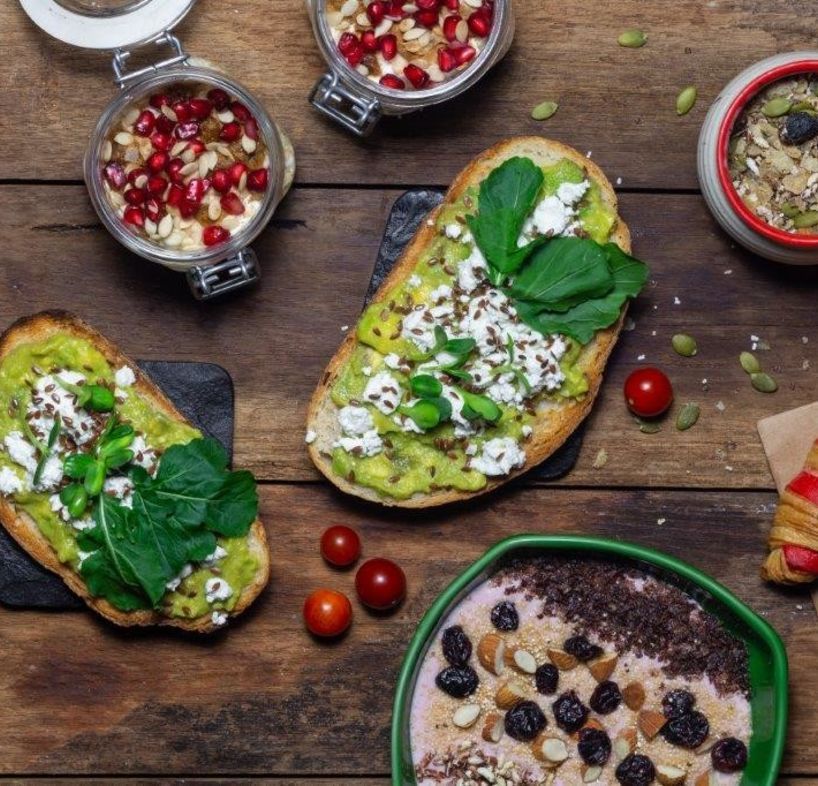
Hotel breakfast buffets are generally the most health-friendly meal of the three — featuring fresh fruits, eggs, whole grain options, yoghurt, and lighter preparations designed for the morning. If calorie management is your goal, the hotel breakfast buffet is your best starting point.
How BookMyBuffet Helps Health-Conscious Diners
When browsing hotel buffets on BookMyBuffet, you can use the dietary filters to find buffets that specifically offer:
- Vegetarian and vegan sections
- Gluten-free options
- Live counter stations (fresher, made-to-order food)
- Hotels known for wellness dining initiatives
BookMyBuffet also allows you to add notes when booking — so you can flag your dietary requirements to the hotel before you arrive, giving the kitchen time to prepare appropriate options.
- ✅ Dietary preference filters available
- ✅ Special requirement notes at booking
- ✅ Genuine guest reviews mentioning food quality and healthy options
- ✅ No advance payment required on most listings
- ✅ Instant booking confirmation
Find a Hotel Buffet That Works for Your Health Goals
You should not have to choose between eating well and enjoying a great hotel buffet experience. India's best hotels are increasingly catering to health-conscious diners — and BookMyBuffet makes it easy to find and book the ones that do.its an experiential dining you shouldnt miss
Visit BookMyBuffet.com and find hotel buffets across India with wellness dining options, dietary filters, and instant table booking.